
In Canada, fresh food vending machines are becoming a practical solution to new consumer habits: buying quickly, accessing products at any time of day, and offering a more premium alternative to traditional vending machines. As demand for fresh, local, and convenient food continues to grow, these machines are creating new opportunities for retailers, producers, and operators looking to diversify their offering.
As Laurent, who installed a meat vending machine three years ago, explains, “sales took off right away.” This kind of feedback clearly shows the potential of these solutions when they respond to a real local need.
This article explains how fresh food vending machines work in Canada, what products they can offer, what their benefits are, and what should be considered before investing.
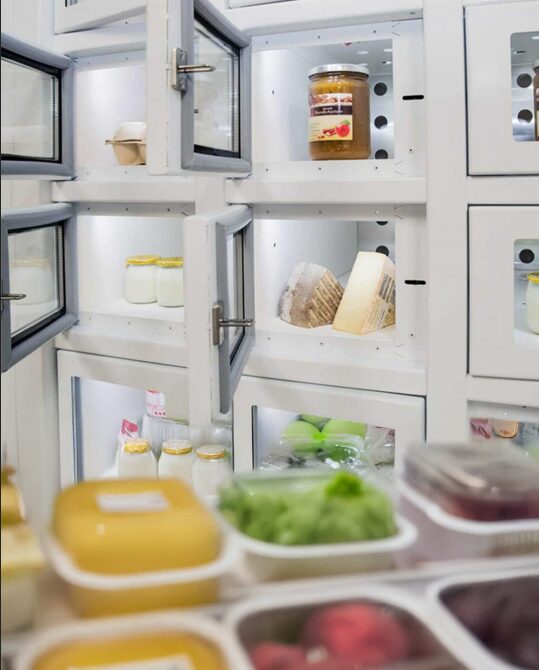
What is a fresh food vending machine?
A fresh food vending machine is a self-service retail machine that allows businesses to sell refrigerated, frozen, or dry food products without the need for permanent on-site staff. It can be installed in a wide range of settings: outside a shop, on a farm, along a main road, in a rural area, or in a professional workspace.
This type of solution makes it possible to sell products such as meat, fish, fruit, vegetables, or ready-made meals around the clock, while offering customers a simple and fast purchasing experience.
What products can be sold?
Fresh food vending machines make it possible to offer a wide range of products depending on the needs of the sales point. They can be used to sell grocery items, fresh products, or frozen goods, and different module types can be combined to create a more complete offer.
At Automat-e, this flexibility makes it possible to design a custom autonomous store tailored to each client’s needs. Bakers, butchers, restaurateurs, and cheesemakers can extend their sales hours and reach customers who are not always able to buy during standard opening times.
Pierre-Louis, who chose to sell bread in a town without a bakery, says: “We got off to a flying start. We’re selling twice as much as expected.” A strong example of the need this type of solution can address.
How does a fresh food vending machine work?
The operation of a fresh food vending machine is simple for the operator and seamless for the customer. The operator loads the compartments, configures the products through management software, and monitors sales remotely.
Maintaining the right temperature is essential to ensure food safety. Temperatures must be continuously monitored and adapted to the products being sold. At Automat-e, temperature readings are taken automatically every 15 minutes to monitor conditions and alert the operator if there is any deviation.
Customers, meanwhile, select their products on the touchscreen or by choosing the compartment number, complete payment, and then collect their items once the compartment opens. The experience is simple, fast, and accessible.
Christelle, a customer, installed 370 compartments of local products in a small village located several kilometers from the nearest store. She sums up the impact of the project by saying: “They’ve changed our customers’ daily lives.”
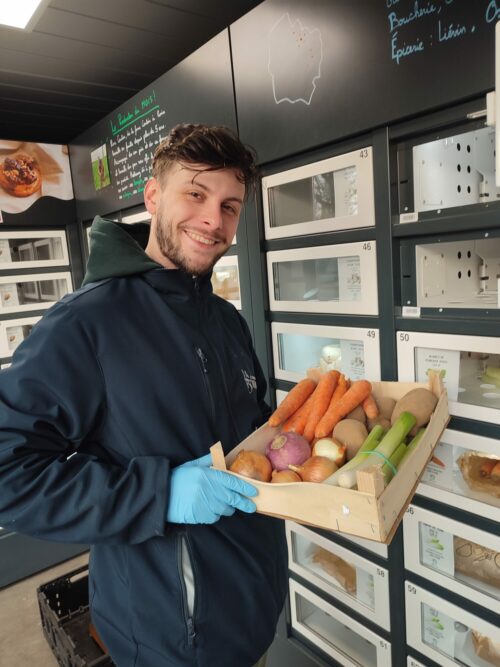
What are the benefits for retailers?
Operating a self-service food locker offers several advantages for retailers. This innovative sales solution makes it possible to:
-
sell products around the clock;
-
offer access to products in areas underserved by shops;
-
operate without on-site staff;
-
increase revenue through new sales time slots.
These benefits are confirmed by real-world feedback. Adrien, a baker, explains that many customers come to buy bread between 7:30 p.m. and 9:00 p.m., when his bakery is closed. According to him, “the locker opened up new sales windows for us.” Jason, a pastry chef, has seen the same effect: “Even when we’re closed, we keep selling.”
Where should you install a fresh food vending machine in Canada?
In Canada, there are many possible locations for a food vending machine. The right choice depends on the target audience, the level of foot traffic, and the type of offer being sold.
Possible locations include rural areas, cities, outside a store, in a commercial zone, on a parking lot, on a farm, or near a busy road. Farmers often use them as farm shops, while urban retailers see them as a way to generate additional sales and broaden their customer base.
The key is to choose a location that matches local shopping habits and expected traffic levels.
What constraints should you anticipate?
Before installing a fresh food vending machine in Canada, several constraints must be anticipated: maintaining the cold chain, energy consumption, hygiene, restocking frequency, and location selection.
These factors affect both the compliance of the project and its profitability. Strong logistics are also essential to ensure proper product rotation and minimize waste.
How can you assess profitability?
The profitability of a fresh food vending machine depends on several factors: the acquisition model, location, type of products offered, selling price, and level of on-site traffic.
Thanks to connected management software, The Kiosque, it is possible to access sales statistics and analyze compartment performance. These data points make it easier to adjust the offer and track turnover over time.
In general, Automat-e clients report that their machines become profitable in about two years, depending on the project setup. Jean-Yves, a butcher, says his meat locker installation paid for itself in three years and generated more than CAD 323,000 in revenue. Marie, a cattle farmer, explains that her farm-product locker multiplied the sales of her physical shop by eight, and she has since closed it. Babette, a fruit and vegetable producer, says the vending machine “saved her farm business.”
Are you considering a fresh food vending machine project? Contact our team.
We’ll guide you step by step in turning your idea into reality.
FAQ
🔹What fresh products can be sold in a vending machine?
You can sell many fresh products: fruit, vegetables, yogurt, cheese, meat, ready-made meals, or sandwiches.
🔹Does a fresh food vending machine need to be refrigerated?
Yes, refrigeration is essential to maintain the cold chain and ensure proper product preservation.
🔹How long can products be stored in a machine?
Storage time depends on the products’ best-before date. The software helps manage dates, organize rotation, and highlight items that need to be sold first.
🔹Where can a fresh food vending machine be installed?
It can be installed in rural areas, in cities, outside a store, on a farm, in a parking lot, or in any other suitable high-traffic location.
🔹How profitable is a fresh food vending machine?
Profitability depends on several variables: location, product range, initial investment, and traffic. It should be assessed on a case-by-case basis.
🔹Can ready-made meals, salads, or sandwiches be sold?
Yes, absolutely. These products are particularly well suited to fresh food vending machines, provided that storage rules are respected.



